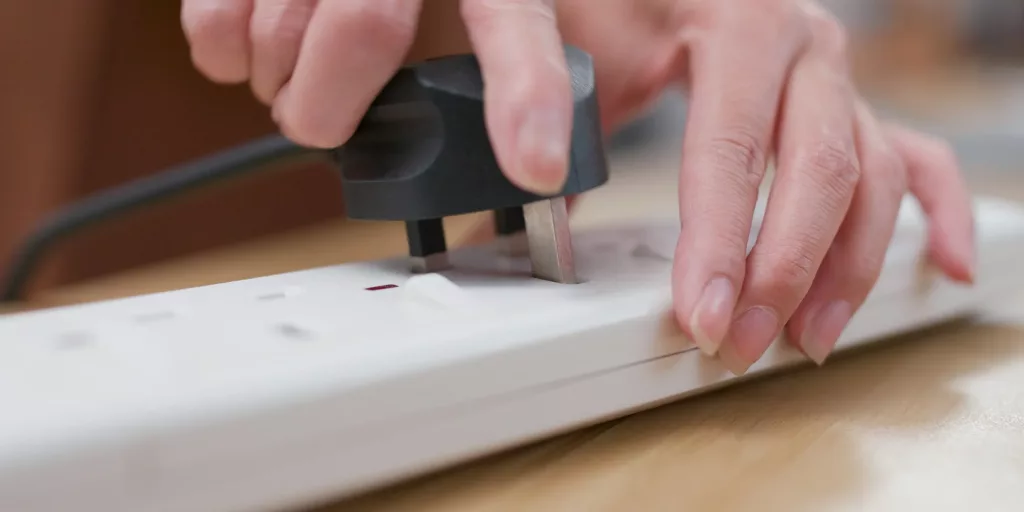
PAT testing usually takes a few minutes per appliance, but the full appointment time depends on how many items need testing, the type of equipment, and how easy it is to access each plug, lead, and appliance. A small rental property may only take a short visit, while a busy office, shop, workshop, or commercial site can take much longer.
For most landlords and small businesses, the key question is not just how long one item takes. It is how long the full visit will take from arrival to completion, including the visual inspection, electrical tests, labels, records, and final PAT testing report.
This guide explains what affects the timing, what happens during the appointment, and how to prepare so your PAT testing visit runs smoothly.
How Long Does PAT Testing Take on Average?
As a general guide, a straightforward PAT test can take around 2 to 5 minutes per appliance. Some simple items may be quicker, while more complex equipment, awkward access, damaged plugs, extension leads, or appliances that need extra checks can take longer.
A small domestic or rental property with only a handful of appliances may be completed in under an hour. A business with 30 appliances may take longer because each item needs to be located, visually checked, electrically tested where required, labelled, and recorded.
Typical examples include:
- A small rental property with 10 items may take around 30 to 60 minutes.
- A small office with 20 to 30 items may take around 1 to 2 hours.
- A shop, salon, or workshop with more appliances may need several hours.
- A larger commercial site may require a planned appointment based on the number of items and access requirements.
The most accurate estimate will always depend on the appliance list and the site layout. For a clearer appointment time, you can book or enquire through LegionellaRiskandPAT’s PAT testing services.
Save time and stay safe. Book your fast Scottish PAT test with us today!
What Happens During a PAT Testing Appointment?
A PAT testing appointment is not just plugging a machine into an appliance and printing a label. It is a structured safety check designed to confirm whether portable electrical equipment is safe to continue using.
A competent tester will usually:
- Identify each appliance that needs to be checked.
- Carry out a visual inspection of the plug, cable, casing, and general condition.
- Perform the appropriate electrical tests for the appliance type.
- Record whether the item has passed or failed.
- Apply test labels where appropriate.
- Provide documentation or a PAT test certificate after the inspection.
The visual inspection matters because many electrical safety issues are visible before testing begins. Damaged cables, cracked plugs, or exposed wiring, can all affect whether an item passes.
This is why the appointment time depends on more than the number of appliances. Two properties can have the same number of items but take different lengths of time if one has easy access and well-maintained appliances while the other has tangled cables, hidden plugs, or damaged equipment.
What Affects How Long PAT Testing Takes?
The main factors are the number of appliances, the type of electrical equipment, access, and whether any item needs extra attention. Preparing the property before the visit can make a noticeable difference.
Number of Appliances Being Tested
The number of items is the biggest timing factor. Every appliance must be identified, checked, tested where needed, labelled, and recorded. A kettle,computer monitor, printer, extension lead, charger, lamp, or power tool can each count as an item depending on what is being inspected.
For landlords, the list may be short if the property is unfurnished. For furnished rental properties, the number may increase quickly if the property includes kitchen appliances, lamps, televisions, extension leads, or supplied chargers.
For businesses, the count can be higher because offices and commercial premises often include computers, monitors, printers, kitchen equipment, floor cleaners, extension cables, display equipment, and staff appliances.
Type of Electrical Equipment
Not all equipment takes the same amount of time. Simple appliances are usually quicker to inspect and test. More complex or higher-risk items may need closer attention.
Class 1 appliances, which rely on an earth connection for safety, often require earth continuity and insulation resistance checks. Class 2 appliances, which are double insulated, are checked differently. Extension leads also need careful inspection because they are moved, pulled, stored, and reused frequently.
Some equipment may need a more cautious approach, especially IT equipment, sensitive electronics, or appliances that cannot be switched on safely during testing. If you are unsure about newer appliances, read our guide to PAT testing new equipment.
Access Around the Property
Access can make a quick job take longer. If plugs are behind heavy furniture, under desks, inside cupboards, or hidden behind shop fittings, the tester needs extra time to reach each item safely.
Good preparation helps. Before the appointment, try to make sure appliances are easy to identify and plugs can be reached where possible. In offices, it helps if staff know testing is taking place so laptops, chargers, and desk equipment are available.
For rental properties, landlords or agents should make sure keys, tenant access, appliance locations, and parking details are arranged in advance. This keeps the appointment efficient and avoids repeat visits.
Failed or Damaged Appliances
Failed appliances can also increase the appointment time. If an item has visible damage or fails an electrical test, the tester may need to record the issue clearly, apply a fail label, remove the item from use if appropriate, and explain the result.
Common issues include:
- Damaged or frayed cables.
- Cracked plugs or casings.
- Loose connections.
- Burn marks or overheating.
- Damaged extension leads.
- Unsafe chargers or adapters.
Failed equipment does not always mean the whole appointment will be delayed, but it does require proper recording. The purpose of PAT testing is not just to pass items quickly. It is to identify electrical safety risks before they cause harm.
Ready for a seamless inspection? Contact us now to book your efficient PAT testing
Ensure Electrical Safety Today
How Long Does PAT Testing Take for Different Property Types?
Different premises have different testing needs. A landlord, office manager, shop owner, and facilities manager may all book PAT testing, but the appointment length can vary significantly.
Rental Properties and Landlord PAT Testing
For landlords, PAT testing is usually quicker when the property has a limited number of supplied appliances. A small rental property may include a kettle, toaster, microwave, lamps, fridge, washing machine, television, or extension lead.
In Scotland, landlords often arrange PAT testing as part of wider safety management. It may sit alongside other checks, records, and documents used to show that the property is being maintained responsibly.
Offices, Shops and Small Businesses
Offices, shops, salons, cafes, clinics, and small commercial premises usually take longer than a simple domestic property because there are more items and more people on site. Desks, staff rooms, stock areas, treatment rooms, and customer-facing spaces may all contain electrical equipment.
A business appointment can often be managed while the workplace is open, but some disruption is possible because appliances may need to be accessed, switched off briefly, or moved for inspection. Planning the visit around quieter periods can help.
For workplace appointments, our commercial PAT testing service is designed for businesses that need clear records, labels, and practical safety documentation.
Larger Commercial Premises
Larger commercial sites can take several hours or may need a more detailed plan. The appointment may involve multiple rooms, departments, floors, workshops, communal areas, or equipment groups.
The timing depends on:
- How many appliances are present.
- Whether the site is occupied during testing.
- Whether equipment can be accessed safely.
- Whether specialist areas need supervision.
- Whether repeat visits are needed for locked rooms or unavailable equipment.
For larger jobs, it is best to provide an estimated appliance count before booking. This allows the provider to plan enough time and avoid rushing the inspection.
Landlord or business owner? Protect your property with our reliable, certified PAT testing services.
How to Make PAT Testing Quicker on the Day
A little preparation can reduce delays and make the appointment smoother.
Before your tester arrives:
- Make a rough list of appliances to be tested.
- Clear access to plugs, extension leads, and equipment.
- Tell staff or tenants that testing is taking place.
- Keep keys, entry instructions, and parking details ready.
- Remove any items you already know are broken or unsafe.
- Gather portable items such as chargers, laptops, and small appliances in accessible areas.
This is especially useful for businesses with many desks or for landlords managing several properties. If the tester has to search for items or wait for access, the appointment will take longer.
For tools and charging equipment, it is also worth checking whether the item itself, the charger, or the lead needs attention.
Book PAT Testing in Scotland
At LegionellaRiskandPAT, we make legal compliance stress-free for landlords and property managers across Scotland. Our expert team provides fast, reliable Portable Appliance Testing (PAT) alongside our core water safety audits to ensure your tenants are fully protected from faulty electrical equipment. Don’t risk heavy penalties or compromise on safety. Book your professional PAT testing with us today for complete peace of mind and certified, hassle-free property compliance.